Ukulele Fretboard
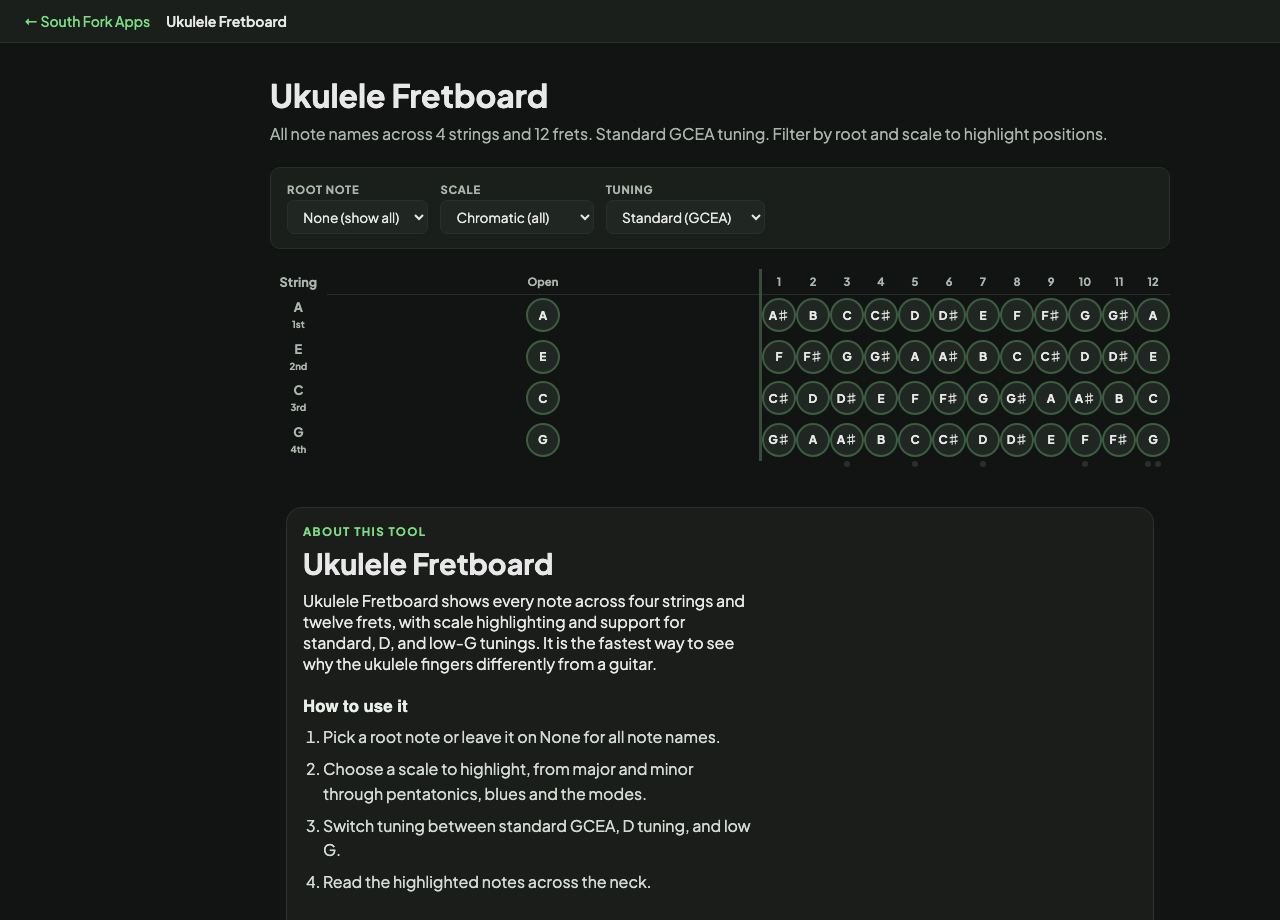
All note names across 4 strings and 12 frets. Standard GCEA tuning. Filter by root and scale to highlight positions.
Ukulele Fretboard
Ukulele Fretboard shows every note across four strings and twelve frets, with scale highlighting and support for standard, D, and low-G tunings. It is the fastest way to see why the ukulele fingers differently from a guitar.
How to use it
- Pick a root note or leave it on None for all note names.
- Choose a scale to highlight, from major and minor through pentatonics, blues and the modes.
- Switch tuning between standard GCEA, D tuning, and low G.
- Read the highlighted notes across the neck.
Reentrant tuning, and why it matters
Standard ukulele tuning is GCEA, but the G is normally reentrant, meaning it is tuned above the C rather than below it. The strings do not run low to high in pitch order, which is what gives the instrument its bright, chiming sound.
Low G tuning drops that string an octave so the instrument runs in pitch order like a guitar. The fingerings are identical, but scale runs and bass notes sound completely different.
Worked example
Mapping C major, the friendliest key on a ukulele:
- Root NoteC
- ScaleMajor
- TuningStandard (GCEA)
Result: The scale highlights on the open C string and across the first three frets, which is why so many beginner ukulele songs sit in C.
When it helps
- Understanding why a guitar shape does not transfer directly to a ukulele.
- Deciding whether low G is worth restringing for.
- Finding scale notes for a melody rather than only strumming chords.
- Learning the neck past the third fret.
Common mistakes
- Treating the top four guitar strings as identical. Ukulele is tuned a fourth higher, so the same shape gives a different chord name.
- Expecting the open G to be the lowest note in standard tuning. In reentrant tuning it is not.