Vigenère Cipher
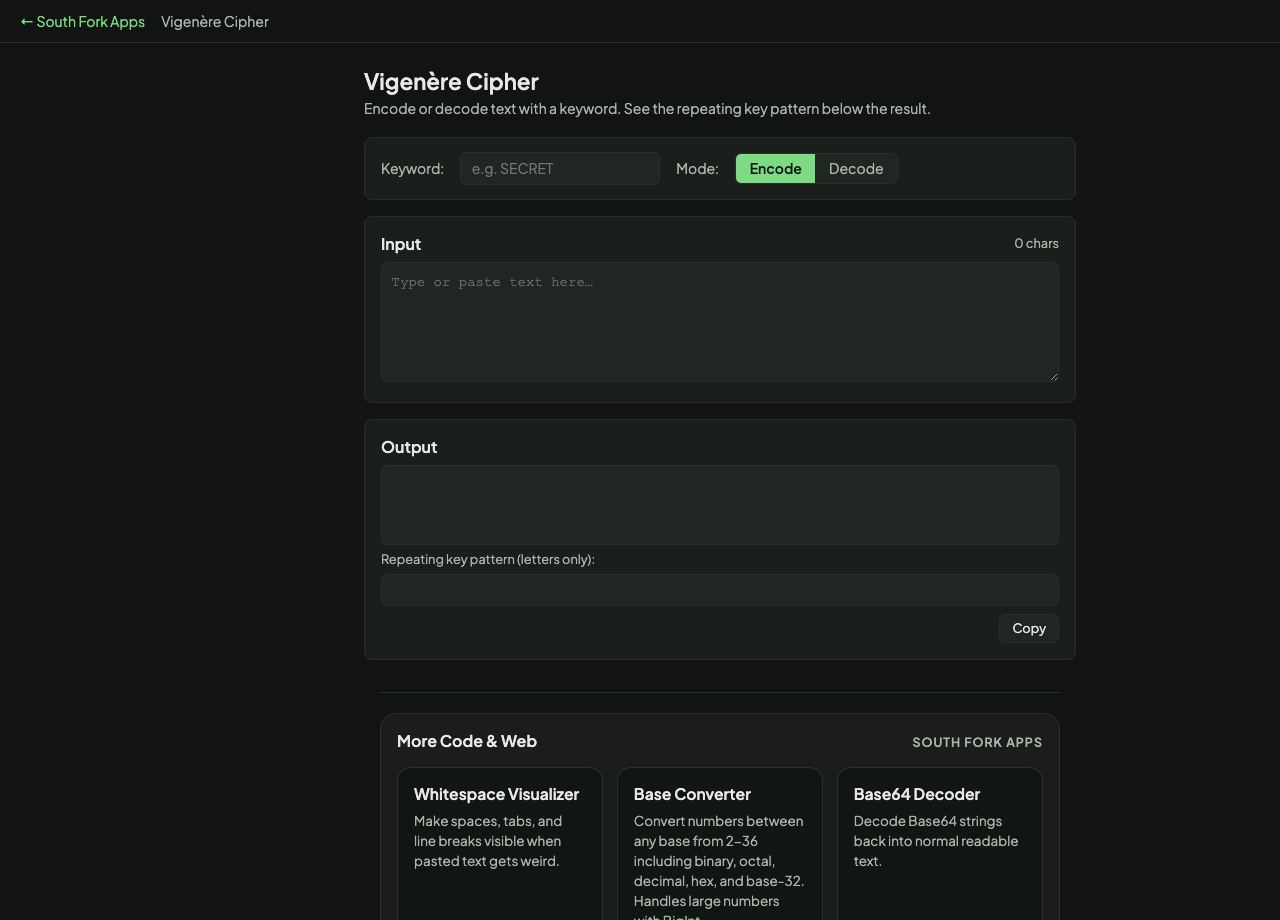
Encode or decode text with a keyword. See the repeating key pattern below the result.
Vigenère Cipher
Vigenere Cipher encodes and decodes using a repeating keyword, which shifts each letter by a different amount depending on its position.
How to use it
- Enter your message and a keyword.
- Choose encode or decode.
- Copy the result. The same keyword is needed to reverse it.
Polyalphabetic, and why that mattered
A Caesar cipher applies one shift to every letter, so letter frequencies survive and give it away. Vigenere uses a keyword where each letter specifies a different shift, cycling as it goes, so the same plaintext letter encodes differently depending on where it falls.
That flattening of letter frequency made it genuinely strong for three centuries, and it was known as le chiffre indechiffrable. Kasiski published a general break in 1863: repeated sequences in the ciphertext reveal the key length, after which the message splits into several Caesar ciphers that each fall to frequency analysis.
When it helps
- Learning how classical cryptography advanced beyond simple substitution.
- Solving a Vigenere puzzle in a game or a CTF.
- Teaching why key length and key reuse matter.
- Historical or recreational encoding.
Common mistakes
- Using it for real security. It has been broken since 1863 and offers nothing against modern analysis.
- Using a short keyword, which shortens the cycle and makes the break easier.
- Assuming a long message is safer. Longer ciphertext gives an attacker more repetitions to work with, not fewer.